
SEO Title: UCLA: Admissions, Programs, Tuition, Scholarships & Student Guide
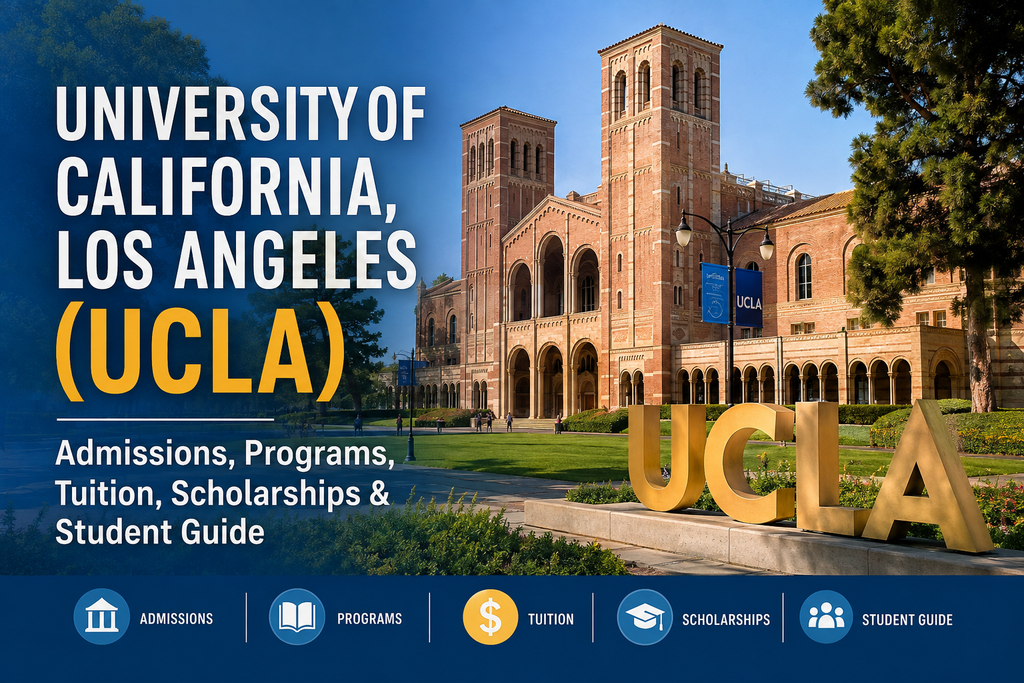
Meta Description: Explore this comprehensive UCLA guide covering admissions, academic programs, tuition and costs, financial aid, scholarships, campus life, rankings, and what students should consider before applying.
Recommended URL Slug:/universities/university-of-california-los-angeles/
Primary Keyword: UCLA
Secondary Keywords: University of California Los Angeles, UCLA admissions, UCLA programs, UCLA tuition, UCLA scholarships, studying at UCLA
Search Intent: Informational — students and families researching UCLA before applying.
University of California, Los Angeles (UCLA): Admissions, Programs, Tuition, Scholarships & Student Guide
Introduction
The University of California, Los Angeles, widely known as UCLA, is one of the best-known public universities in the United States. Located in Los Angeles, California, UCLA attracts students from across the United States and around the world because of its strong academic programs, research opportunities, location, campus environment, and broad range of student activities.
As part of the University of California system, UCLA combines the resources of a major public research university with the academic opportunities associated with a globally recognized institution. Students can choose from a wide variety of undergraduate and graduate programs across areas such as engineering, business-related fields, life sciences, social sciences, arts, humanities, medicine, and other disciplines.
However, UCLA is also a highly competitive university. Applicants should understand the admission process, expected academic preparation, financial considerations, and the overall student experience before deciding whether the university is a good match.
This guide provides an overview of UCLA’s history, academics, admissions, tuition and costs, financial aid, campus life, reputation, and the factors students should consider before applying.
UCLA at a Glance
- Location: Los Angeles, California, United States
- Founded: 1919
- Institution Type: Public research university
- University System: University of California
- Academic Levels: Undergraduate, graduate, and professional education
- Major Areas of Study: Engineering, sciences, humanities, social sciences, arts, health-related fields, and more
- Campus Setting: Urban and residential environment in the Los Angeles area
- Official Website: UCLA’s official university website
UCLA is particularly attractive to students looking for a large university environment with significant academic resources and access to a major global city.
History and Background
How UCLA Started
UCLA was established in 1919 and developed as part of the University of California system. Its early history was connected to the growing demand for higher education in Southern California.
Over time, the university expanded from its original academic offerings into a major research institution with a broad range of schools, departments, professional programs, and research centers.
Its location in Los Angeles also played an important role in its development. As the region became an important center for entertainment, technology, business, healthcare, research, and international activity, UCLA developed connections across many industries and professional fields.
Development and Reputation
Today, UCLA is widely recognized as one of the leading public research universities in the United States. Its reputation is supported by academic research, faculty expertise, graduate and professional education, and a large network of students and alumni.
The university’s size is also an important part of its identity. UCLA offers a broad academic environment where students can explore different subjects, participate in research, join organizations, and connect with people from diverse backgrounds.
Because of its academic reputation and popularity, admission to UCLA is highly competitive.
Academic Programs
One of UCLA’s major strengths is the variety of academic opportunities available to students.
Undergraduate Programs
Undergraduate students can study across multiple academic areas. Depending on their academic interests, students may pursue programs connected to:
- Engineering and technology
- Biological sciences
- Physical sciences
- Mathematics
- Psychology
- Economics
- Political science
- Sociology
- History
- English and literature
- Film and media-related studies
- Arts and design
- Education-related fields
- International and area studies
Students should review the current academic catalog and school-specific requirements before applying because majors can have different preparation expectations.
Graduate Programs
UCLA also offers a wide range of graduate and professional programs.
Graduate students may pursue advanced education in areas such as:
- Engineering
- Business and management
- Medicine and health sciences
- Law
- Education
- Public affairs
- Social sciences
- Arts and humanities
- Sciences and research fields
Graduate admission requirements vary considerably depending on the department or professional school. Applicants should therefore focus on the official requirements for their specific program rather than assuming that all UCLA graduate programs follow the same process.
Popular Fields of Study
UCLA is known for strength across many academic disciplines rather than being limited to one area.
Students frequently explore fields connected to:
- Computer science and engineering
- Biological and life sciences
- Economics
- Psychology
- Political science
- Business-related career pathways
- Film and media
- Mathematics and physical sciences
- Health and medical fields
- Social sciences
The best program for an individual student depends on personal interests, academic preparation, career goals, and the specific opportunities available within the department.
Admissions
Undergraduate Admission
Admission to UCLA is highly selective. Strong applicants generally demonstrate excellent academic preparation and a challenging high school curriculum.
The University of California application process has its own structure, so students applying to UCLA should carefully review the current UC application requirements.
Academic performance is important, but applicants should also understand how the University of California evaluates coursework and other parts of the application.
International students may have additional academic documentation or English-language requirements depending on their educational background.
Because admission policies can change, applicants should always verify the latest requirements directly through UCLA and the University of California admissions system.
Graduate Admission
Graduate admissions are generally handled by individual departments and schools.
Requirements may include:
- A completed undergraduate degree or equivalent qualification
- Academic transcripts
- A statement of purpose or personal statement
- Letters of recommendation
- A résumé or curriculum vitae
- Relevant academic or professional experience
- Standardized tests where required by a specific program
- English-language proficiency documentation for eligible international applicants
Some programs may also require portfolios, interviews, writing samples, or additional materials.
General Admission Requirements
Applicants should focus on:
- Meeting academic eligibility requirements.
- Completing required coursework.
- Preparing application materials carefully.
- Reviewing major-specific requirements.
- Meeting application deadlines.
- Checking requirements for international applicants where relevant.
A strong application should be accurate, complete, and submitted according to official instructions.
Application Process
A general application process may include:
- Researching UCLA programs and majors.
- Reviewing current admission requirements.
- Preparing academic records.
- Completing the appropriate application.
- Submitting required materials before the deadline.
- Monitoring official application communications.
- Reviewing financial aid requirements separately.
Students should avoid relying on unofficial websites for application deadlines or requirements because these details can change.
Tuition and Costs
Tuition
The cost of attending UCLA depends on several factors.
These may include:
- California residency status
- Undergraduate or graduate enrollment
- Specific academic program
- Housing choices
- Personal expenses
- Health insurance and other required costs
Students from outside California may face different tuition and fee structures than eligible California residents.
Graduate and professional programs may also have their own tuition structures.
For this reason, students should use UCLA’s current official cost and financial aid resources rather than relying on outdated figures from third-party websites.
Housing and Living Expenses
Housing is a major financial consideration for UCLA students.
Living costs can depend on whether a student:
- Lives in university housing
- Shares off-campus housing
- Lives with family
- Chooses different housing and transportation arrangements
Los Angeles is a major metropolitan area, and students should carefully plan for living expenses in addition to tuition and university fees.
Other Student Costs
Students may also need to budget for:
- Books and course materials
- Technology
- Transportation
- Food
- Personal expenses
- Health-related costs
- Travel
Creating a realistic annual budget can help students and families understand the full cost of attending UCLA.
Scholarships and Financial Aid
University Financial Aid
Financial aid can help eligible students manage educational costs.
Depending on eligibility and program rules, financial assistance may include:
- Grants
- Scholarships
- Work opportunities
- Loans
Students should complete required financial aid applications according to the deadlines that apply to them.
Financial aid eligibility may depend on factors such as residency, citizenship or immigration status, family financial circumstances, and university policies.
External Scholarships
Students can also research external scholarships offered by:
- Foundations
- Community organizations
- Professional associations
- Private scholarship programs
- International education organizations
Students should carefully verify scholarship eligibility and avoid services that require suspicious payments or make unrealistic guarantees.
For additional guidance, UniCoStudy’s scholarship articles can help students understand how to find scholarships for U.S. universities and how university financial aid works.
Campus and Student Life
Campus Environment
UCLA offers a large and active campus environment.
Students have access to academic buildings, libraries, research facilities, recreational opportunities, cultural events, and student services.
The university’s location also gives students access to many opportunities in the wider Los Angeles region.
However, a large university environment may not suit every student equally. Some students enjoy having many academic and social opportunities, while others may prefer smaller institutions with a more intimate campus structure.
Student Organizations
Student organizations can provide opportunities to:
- Meet other students
- Explore personal interests
- Develop leadership skills
- Participate in cultural communities
- Engage in academic activities
- Join recreational or service organizations
The availability of student groups can make it easier for students to find communities within a large university.
Housing and Student Facilities
Housing and student services are important parts of the university experience.
Students should research:
- Available housing options
- Housing application procedures
- Dining arrangements
- Transportation
- Campus safety resources
- Academic support services
- Career services
Housing availability and policies can change, so students should always check UCLA’s official information before making decisions.
Rankings and Reputation
UCLA has a strong national and international reputation.
When reviewing rankings, students should remember that rankings depend on the organization and methodology used. Different ranking systems may emphasize factors such as:
- Academic reputation
- Research performance
- Faculty resources
- International outlook
- Graduate outcomes
- Publications and citations
A ranking can be useful as one research tool, but it should not be the only factor used to choose a university.
Students should identify the ranking organization and publication year before comparing UCLA with universities such as UC Berkeley, Stanford University, or other institutions.
For a broader understanding, UniCoStudy’s future guide on How U.S. University Rankings Work can help students evaluate rankings more carefully.
Why Students Choose UCLA
Students may choose UCLA for several reasons.
Strong Academic Opportunities
UCLA offers programs across many disciplines, making it suitable for students with different academic interests.
Research Environment
As a major research university, UCLA provides opportunities for students and faculty to participate in research and academic projects.
Los Angeles Location
The university’s location can provide access to industries, organizations, cultural institutions, and professional opportunities.
Large Student Community
Students who enjoy a diverse and active university environment may appreciate UCLA’s broad campus community.
Public University Resources
As part of the University of California system, UCLA combines public university education with extensive academic and research resources.
Pros and Considerations
Potential Advantages
- Strong academic reputation
- Broad range of programs
- Major research opportunities
- Location in Los Angeles
- Large and diverse student community
- Extensive student activities and organizations
Important Considerations
- Admission is highly competitive
- The cost may vary significantly based on residency and personal circumstances
- Living expenses in the Los Angeles area require careful planning
- A large university environment may feel overwhelming for some students
- Popular programs may have significant academic demands
The best university choice is not necessarily the institution with the highest reputation. Students should consider academic fit, affordability, location, career goals, and the type of campus experience they want.
Frequently Asked Questions
Is UCLA a public or private university?
UCLA is a public research university and is part of the University of California system.
Is admission to UCLA competitive?
Yes. UCLA is highly competitive, and applicants should carefully review the latest official admission requirements.
Does UCLA offer graduate programs?
Yes. UCLA offers graduate and professional education across a wide range of academic and professional fields.
Is UCLA a good choice for international students?
UCLA can offer strong academic and cultural opportunities for international students, but applicants should carefully review academic eligibility, immigration requirements, financial planning, and English-language requirements where applicable.
Is living in Los Angeles expensive for students?
Living costs can be significant, particularly depending on housing and lifestyle choices. Students should include housing, food, transportation, and personal expenses in their financial planning.
Should students choose UCLA based only on rankings?
No. Rankings can be useful, but students should also consider academic programs, cost, location, campus culture, career opportunities, and personal fit.
Conclusion
The University of California, Los Angeles is one of the most prominent public research universities in the United States. Its combination of academic programs, research opportunities, large student community, and location in Los Angeles makes it an attractive option for students from many different backgrounds.
At the same time, UCLA is not automatically the right choice for every applicant. Admission is competitive, educational costs require careful planning, and the size and location of the university may suit some students better than others.
Students considering UCLA should research their intended program, review current admission requirements, estimate the full cost of attendance, explore financial aid options, and compare the university with other institutions.
A thoughtful comparison can help students determine whether UCLA matches their academic goals, financial situation, and preferred university experience.
Suggested Internal Links
Naturally link this article to:
- University of California, Berkeley
- Stanford University
- University of Southern California (USC)
- How to Apply to U.S. Universities
- U.S. University Admission Requirements
- How to Find Scholarships for U.S. Universities
- How Financial Aid Works at U.S. Universities
- How U.S. University Rankings Work
- Guide to Student Life at U.S. Universities
Recommended Authoritative Sources
Before publishing, verify current facts using:
- UCLA official website
- UCLA Undergraduate Admission
- UCLA Graduate Education
- UCLA Financial Aid and Scholarships
- University of California official admissions resources
- Official UCLA housing resources
- Recognized university ranking organizations, with the ranking year clearly identified
Image Alt-Text Suggestions
- UCLA campus buildings and student walkways
- University of California Los Angeles campus aerial view
- Students walking on the UCLA campus
- UCLA academic building in Los Angeles, California