
Introduction
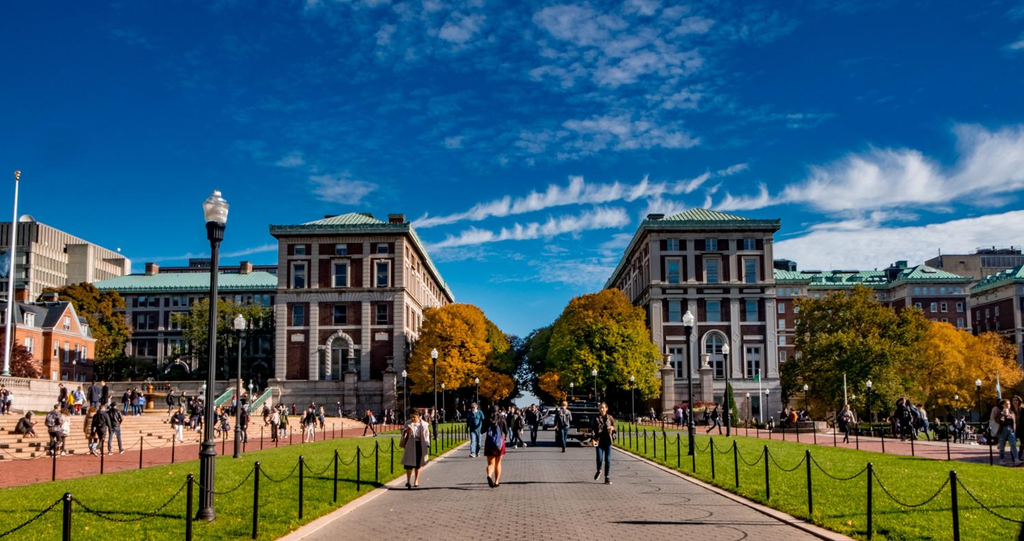
Columbia University is a private Ivy League research university located in New York City, one of the oldest institutions of higher education in the United States. Known for its distinctive Core Curriculum, strong journalism and international affairs programs, and its unmatched access to New York City as a living classroom, Columbia attracts students seeking a rigorous liberal arts foundation combined with the resources of a major global city. This guide covers admissions, costs, financial aid, academics, and campus life at Columbia.
Columbia University at a GlanceColumbia University: Admissions, Programs, Tuition, Scholarships & Student Guide
Introduction
Columbia University is a private Ivy League research university located in New York City, one of the oldest institutions of higher education in the United States. Known for its distinctive Core Curriculum, strong journalism and international affairs programs, and its unmatched access to New York City as a living classroom, Columbia attracts students seeking a rigorous liberal arts foundation combined with the resources of a major global city. This guide covers admissions, costs, financial aid, academics, and campus life at Columbia.
Columbia University at a Glance
- Location: Manhattan, New York City, New York
- Founded: 1754 (as King’s College)
- Institution Type: Private, Ivy League research university
- Major Academic Areas: Liberal Arts, Journalism, International Affairs, Engineering, Business, Law, Medicine
- Undergraduate Schools: Columbia College, Fu Foundation School of Engineering and Applied Science, School of General Studies
- Graduate Options: Columbia Business School, Columbia Law School, Columbia Journalism School, Vagelos College of Physicians and Surgeons, School of International and Public Affairs (SIPA), and more
- Official Website: columbia.edu
History and Background
How the University Started
Columbia was founded in 1754 as King’s College by royal charter of King George II, making it the oldest institution of higher education in New York State and one of the oldest in the country. It was renamed Columbia College after the American Revolution, reflecting its break from British colonial identity.
Development and Reputation
Columbia grew from a small colonial college into a major research university, expanding into professional schools in law, medicine, journalism, business, and international affairs. Its location in New York City has long shaped its academic character, with strong ties to publishing, finance, media, and international diplomacy, including proximity to the United Nations. Columbia is a founding member of the Association of American Universities and is consistently ranked among the top research universities worldwide.
Academic Programs
Undergraduate Programs
Undergraduates typically enroll in Columbia College (liberal arts) or the Fu Foundation School of Engineering and Applied Science. A hallmark of undergraduate education at Columbia is the Core Curriculum, a set of required courses in literature, philosophy, history, art, music, and science that all Columbia College students complete regardless of major.
Graduate Programs
Columbia offers an extensive range of graduate and professional programs, including Columbia Business School, Columbia Law School, the Graduate School of Journalism, the School of International and Public Affairs, and the Vagelos College of Physicians and Surgeons.
Popular Fields of Study
Popular undergraduate fields include political science, economics, computer science, English, and history, alongside strong interest in pre-law and pre-med tracks. Columbia’s journalism and international affairs graduate programs are considered among the most prestigious in their fields globally.
Admissions
Undergraduate Admission
Undergraduate admission to Columbia is highly selective, among the most competitive in the country. Applicants apply through the Common Application or Coalition Application, along with Columbia-specific supplemental essays that often ask about the Core Curriculum and fit with the university’s intellectual community.
Graduate Admission
Graduate admission requirements vary by school. Applicants to programs like Columbia Business School, Columbia Law, or the Journalism School should review each school’s specific requirements, as prerequisites, test requirements, and application materials differ substantially.
General Admission Requirements
Typical undergraduate application requirements include:
- Common Application or Coalition Application with Columbia-specific supplemental essays
- Official high school transcript
- Letters of recommendation
- Standardized test policy (test-optional/test-flexible policies have shifted in recent years; applicants should verify current policy on Columbia’s official admissions site)
- Extracurricular activities and personal essays
Application Process
Columbia offers Early Decision (binding) and Regular Decision timelines. Because admissions requirements and deadlines can change year to year, applicants should confirm current details directly on Columbia’s official undergraduate admissions website before applying.
Tuition and Costs
Tuition
As a private Ivy League institution, Columbia’s tuition is substantial and updated annually. Prospective students should refer to Columbia’s official Student Financial Services page for current tuition and fee figures rather than older published data.
Housing and Living Expenses
New York City living costs are a significant factor in Columbia’s overall cost of attendance. On-campus housing and meal plans are detailed in Columbia’s official cost of attendance breakdown, published each academic year.
Other Student Costs
Additional expenses can include health insurance, textbooks and course materials, and higher personal/travel costs typical of living in New York City. Columbia’s financial aid office provides an updated, detailed cost breakdown annually.
Scholarships and Financial Aid
University Financial Aid
Columbia is need-blind in undergraduate admissions for domestic applicants and meets 100% of demonstrated financial need through grants rather than loans for eligible students. Aid is need-based; Columbia does not offer academic merit scholarships for most undergraduate applicants. Policies for international applicants can differ and should be confirmed on Columbia’s official site.
External Scholarships
Students can pursue external scholarships from private foundations, employers, and government programs to supplement university aid. See UniCoStudy’s Scholarships for International Students in the United States guide for additional strategies.
Campus and Student Life
Campus Environment
Columbia’s Morningside Heights campus in upper Manhattan offers a defined, gated campus feel within one of the world’s largest cities, giving students both a traditional campus community and direct access to New York’s cultural, professional, and social opportunities.
Student Organizations
Columbia hosts hundreds of student clubs and organizations, including strong performing arts, publishing, activism, and pre-professional groups, along with NCAA Division I athletics as part of the Ivy League.
Housing and Student Facilities
Columbia guarantees on-campus housing for undergraduates throughout their four years, a distinctive feature compared to many peer universities where students often move off-campus after freshman year.
Rankings and Reputation
Columbia is consistently ranked among the top universities in the United States and the world by organizations such as U.S. News & World Report and QS World University Rankings, with particular strength in journalism, international affairs, and law. As rankings vary by methodology and year, students should consult the original source directly. See UniCoStudy’s How U.S. University Rankings Work for guidance on interpreting rankings.
Why Students Choose Columbia University
Students are often drawn to Columbia for its rigorous Core Curriculum, unmatched access to New York City’s professional and cultural resources, and strong reputation in journalism, international affairs, law, and business. The blend of a structured liberal arts foundation with an urban, global city setting is a defining draw.
Pros and Considerations
Pros: Strong need-based financial aid, distinctive Core Curriculum, unparalleled access to NYC internships and culture, prestigious graduate schools.
Considerations: Extremely competitive admissions, high cost of living in New York City, required Core Curriculum offers less early flexibility than open curriculums at some peer schools, and an urban campus setting that differs from more traditional enclosed campuses.
Frequently Asked Questions
What is Columbia’s Core Curriculum?
It is a set of required courses in literature, philosophy, history, art, music, and science that all Columbia College undergraduates must complete, regardless of major.
Is Columbia need-blind for all applicants?
Columbia’s need-blind policy has historically applied to domestic applicants; international admissions and aid policies should be verified directly on Columbia’s official website, as they can differ and change.
Does Columbia offer merit scholarships?
Generally no — undergraduate financial aid at Columbia is need-based rather than merit-based.
Is Columbia in New York City itself?
Yes, Columbia’s main campus is in Morningside Heights, Manhattan, within New York City.
Conclusion
Columbia University combines a historic, rigorous liberal arts foundation with the unmatched professional and cultural resources of New York City. Its Core Curriculum, strong graduate schools in journalism, law, and international affairs, and generous need-based financial aid make it a top choice for students seeking both intellectual structure and global city access. As always, prospective applicants should verify current admissions requirements, tuition, and aid policies directly on Columbia’s official website.
Internal Link Suggestions:
- → University of Pennsylvania, Cornell University (peer Ivy League profiles)
- → How to Apply to U.S. Universities
- → Early Action vs Regular Decision
- → Scholarships for International Students
- → How U.S. University Rankings Work
Suggested Authoritative Sources: columbia.edu (official admissions & financial aid pages), U.S. News & World Report rankings page for Columbia, Columbia Journalism School official site.
Image Alt-Text Suggestions: “Columbia University Low Library in Morningside Heights”, “Columbia campus in New York City”, “Columbia University students on campus quad”
- Location: Manhattan, New York City, New York
- Founded: 1754 (as King’s College)
- Institution Type: Private, Ivy League research university
- Major Academic Areas: Liberal Arts, Journalism, International Affairs, Engineering, Business, Law, Medicine
- Undergraduate Schools: Columbia College, Fu Foundation School of Engineering and Applied Science, School of General Studies
- Graduate Options: Columbia Business School, Columbia Law School, Columbia Journalism School, Vagelos College of Physicians and Surgeons, School of International and Public Affairs (SIPA), and more
- Official Website: columbia.edu
History and Background
How the University Started
Columbia was founded in 1754 as King’s College by royal charter of King George II, making it the oldest institution of higher education in New York State and one of the oldest in the country. It was renamed Columbia College after the American Revolution, reflecting its break from British colonial identity.
Development and Reputation
Columbia grew from a small colonial college into a major research university, expanding into professional schools in law, medicine, journalism, business, and international affairs. Its location in New York City has long shaped its academic character, with strong ties to publishing, finance, media, and international diplomacy, including proximity to the United Nations. Columbia is a founding member of the Association of American Universities and is consistently ranked among the top research universities worldwide.
Academic Programs
Undergraduate Programs
Undergraduates typically enroll in Columbia College (liberal arts) or the Fu Foundation School of Engineering and Applied Science. A hallmark of undergraduate education at Columbia is the Core Curriculum, a set of required courses in literature, philosophy, history, art, music, and science that all Columbia College students complete regardless of major.
Graduate Programs
Columbia offers an extensive range of graduate and professional programs, including Columbia Business School, Columbia Law School, the Graduate School of Journalism, the School of International and Public Affairs, and the Vagelos College of Physicians and Surgeons.
Popular Fields of Study
Popular undergraduate fields include political science, economics, computer science, English, and history, alongside strong interest in pre-law and pre-med tracks. Columbia’s journalism and international affairs graduate programs are considered among the most prestigious in their fields globally.
Admissions
Undergraduate Admission
Undergraduate admission to Columbia is highly selective, among the most competitive in the country. Applicants apply through the Common Application or Coalition Application, along with Columbia-specific supplemental essays that often ask about the Core Curriculum and fit with the university’s intellectual community.
Graduate Admission
Graduate admission requirements vary by school. Applicants to programs like Columbia Business School, Columbia Law, or the Journalism School should review each school’s specific requirements, as prerequisites, test requirements, and application materials differ substantially.
General Admission Requirements
Typical undergraduate application requirements include:
- Common Application or Coalition Application with Columbia-specific supplemental essays
- Official high school transcript
- Letters of recommendation
- Standardized test policy (test-optional/test-flexible policies have shifted in recent years; applicants should verify current policy on Columbia’s official admissions site)
- Extracurricular activities and personal essays
Application Process
Columbia offers Early Decision (binding) and Regular Decision timelines. Because admissions requirements and deadlines can change year to year, applicants should confirm current details directly on Columbia’s official undergraduate admissions website before applying.
Tuition and Costs
Tuition
As a private Ivy League institution, Columbia’s tuition is substantial and updated annually. Prospective students should refer to Columbia’s official Student Financial Services page for current tuition and fee figures rather than older published data.
Housing and Living Expenses
New York City living costs are a significant factor in Columbia’s overall cost of attendance. On-campus housing and meal plans are detailed in Columbia’s official cost of attendance breakdown, published each academic year.
Other Student Costs
Additional expenses can include health insurance, textbooks and course materials, and higher personal/travel costs typical of living in New York City. Columbia’s financial aid office provides an updated, detailed cost breakdown annually.
Scholarships and Financial Aid
University Financial Aid
Columbia is need-blind in undergraduate admissions for domestic applicants and meets 100% of demonstrated financial need through grants rather than loans for eligible students. Aid is need-based; Columbia does not offer academic merit scholarships for most undergraduate applicants. Policies for international applicants can differ and should be confirmed on Columbia’s official site.
External Scholarships
Students can pursue external scholarships from private foundations, employers, and government programs to supplement university aid. See UniCoStudy’s Scholarships for International Students in the United States guide for additional strategies.
Campus and Student Life
Campus Environment
Columbia’s Morningside Heights campus in upper Manhattan offers a defined, gated campus feel within one of the world’s largest cities, giving students both a traditional campus community and direct access to New York’s cultural, professional, and social opportunities.
Student Organizations
Columbia hosts hundreds of student clubs and organizations, including strong performing arts, publishing, activism, and pre-professional groups, along with NCAA Division I athletics as part of the Ivy League.
Housing and Student Facilities
Columbia guarantees on-campus housing for undergraduates throughout their four years, a distinctive feature compared to many peer universities where students often move off-campus after freshman year.
Rankings and Reputation
Columbia is consistently ranked among the top universities in the United States and the world by organizations such as U.S. News & World Report and QS World University Rankings, with particular strength in journalism, international affairs, and law. As rankings vary by methodology and year, students should consult the original source directly. See UniCoStudy’s How U.S. University Rankings Work for guidance on interpreting rankings.
Why Students Choose Columbia University
Students are often drawn to Columbia for its rigorous Core Curriculum, unmatched access to New York City’s professional and cultural resources, and strong reputation in journalism, international affairs, law, and business. The blend of a structured liberal arts foundation with an urban, global city setting is a defining draw.
Pros and Considerations
Pros: Strong need-based financial aid, distinctive Core Curriculum, unparalleled access to NYC internships and culture, prestigious graduate schools.
Considerations: Extremely competitive admissions, high cost of living in New York City, required Core Curriculum offers less early flexibility than open curriculums at some peer schools, and an urban campus setting that differs from more traditional enclosed campuses.
Frequently Asked Questions
What is Columbia’s Core Curriculum?
It is a set of required courses in literature, philosophy, history, art, music, and science that all Columbia College undergraduates must complete, regardless of major.
Is Columbia need-blind for all applicants?
Columbia’s need-blind policy has historically applied to domestic applicants; international admissions and aid policies should be verified directly on Columbia’s official website, as they can differ and change.
Does Columbia offer merit scholarships?
Generally no — undergraduate financial aid at Columbia is need-based rather than merit-based.
Is Columbia in New York City itself?
Yes, Columbia’s main campus is in Morningside Heights, Manhattan, within New York City.
Conclusion
Columbia University combines a historic, rigorous liberal arts foundation with the unmatched professional and cultural resources of New York City. Its Core Curriculum, strong graduate schools in journalism, law, and international affairs, and generous need-based financial aid make it a top choice for students seeking both intellectual structure and global city access. As always, prospective applicants should verify current admissions requirements, tuition, and aid policies directly on Columbia’s official website.
Internal Link Suggestions:
- → University of Pennsylvania, Cornell University (peer Ivy League profiles)
- → How to Apply to U.S. Universities
- → Early Action vs Regular Decision
- → Scholarships for International Students
- → How U.S. University Rankings Work
Suggested Authoritative Sources: columbia.edu (official admissions & financial aid pages), U.S. News & World Report rankings page for Columbia, Columbia Journalism School official site.
Image Alt-Text Suggestions: “Columbia University Low Library in Morningside Heights”, “Columbia campus in New York City”, “Columbia University students on campus quad”