
Introduction
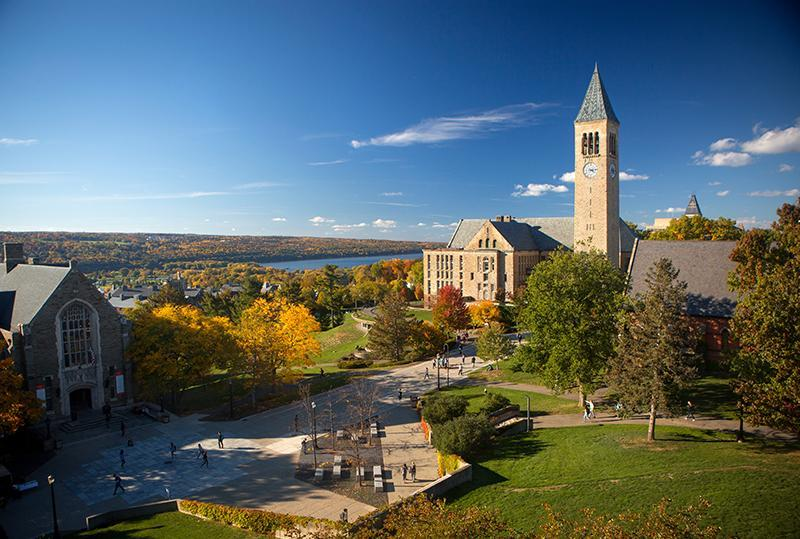
Cornell University is a private Ivy League research university located in Ithaca, New York, distinctive for its founding motto of offering “any person… any study.” Unlike some peer Ivy League schools, Cornell is a hybrid institution — it includes both privately endowed colleges and state-supported statutory colleges through its partnership with New York State. This structure gives Cornell one of the broadest academic ranges in the Ivy League, spanning agriculture, engineering, hospitality management, human ecology, and the liberal arts. This guide covers admissions, tuition, financial aid, academics, and student life at Cornell.
Cornell University at a Glance
- Location: Ithaca, New York
- Founded: 1865
- Institution Type: Private, Ivy League research university (with statutory/state-supported colleges)
- Major Academic Areas: Agriculture and Life Sciences, Engineering, Hotel Administration, Human Ecology, Arts and Sciences, Business, Architecture
- Undergraduate Colleges: College of Arts and Sciences, College of Engineering, College of Agriculture and Life Sciences, College of Human Ecology, School of Industrial and Labor Relations, Nolan School of Hotel Administration, College of Architecture, Art, and Planning, and more
- Graduate Options: Cornell Tech, Cornell Law School, Weill Cornell Medicine, Johnson Graduate School of Management, and other graduate/professional programs
- Official Website: cornell.edu
History and Background
How the University Started
Cornell was founded in 1865 by Ezra Cornell and Andrew Dickson White with a founding philosophy that broke from the more traditional classical curricula of other early American universities. Ezra Cornell’s stated vision — to establish an institution “where any person can find instruction in any study” — shaped Cornell’s distinctively broad and practical academic offerings from the outset.
Development and Reputation
Cornell grew into a major research university with a unique dual structure: some colleges are privately endowed, while others, such as the College of Agriculture and Life Sciences and the School of Industrial and Labor Relations, are statutory colleges partially funded by New York State. This structure has allowed Cornell to build exceptional strength in fields like agriculture, veterinary medicine, hotel administration, and labor relations alongside traditional liberal arts and sciences.
Academic Programs
Undergraduate Programs
Cornell undergraduates apply directly to one of eight undergraduate colleges, each with its own admission criteria and curriculum. This structure allows for specialized study from the start, whether in engineering, hotel administration, agriculture, or the liberal arts.
Graduate Programs
Cornell offers graduate and professional programs through Cornell Law School, Weill Cornell Medicine (based in New York City), the Johnson Graduate School of Management, and Cornell Tech, its graduate technology and engineering campus on Roosevelt Island in New York City.
Popular Fields of Study
Popular undergraduate fields include engineering, computer science, business (through the Dyson School), biology, and hotel administration — a program considered among the best of its kind globally. Cornell’s agricultural and life sciences programs are also highly regarded.
Admissions
Undergraduate Admission
Admission to Cornell is highly selective and college-specific: applicants apply to one of Cornell’s eight undergraduate colleges, and acceptance rates and requirements can vary by college. Applicants apply through the Common Application or Coalition Application with Cornell-specific supplemental essays tailored to their chosen college.
Graduate Admission
Graduate admission requirements vary by school and program. Applicants to Cornell Law, Weill Cornell Medicine, or Cornell Tech should consult each program’s specific requirements directly.
General Admission Requirements
Typical undergraduate application requirements include:
- Common Application or Coalition Application with college-specific supplemental essays
- Official high school transcript
- Letters of recommendation
- Standardized test policy (test-optional/test-flexible policies have shifted in recent years; applicants should verify current policy on Cornell’s official admissions site)
- Extracurricular activities and personal essays relevant to the chosen college
Application Process
Cornell offers Early Decision (binding) and Regular Decision timelines. Because some statutory colleges have distinct application considerations tied to New York State funding, applicants should review both general admissions guidance and college-specific instructions on Cornell’s official admissions website.
Tuition and Costs
Tuition
Cornell’s tuition differs depending on whether a student is enrolled in an endowed college or a statutory (state-supported) college, with New York State residents sometimes eligible for reduced tuition in statutory colleges. Prospective students should check Cornell’s official Student Financial Services page for current, college-specific tuition figures.
Housing and Living Expenses
Ithaca’s cost of living is generally lower than that of major cities like New York or Boston, though on-campus housing, meal plans, and other living expenses still form a significant part of the total cost of attendance, detailed in Cornell’s official annual cost breakdown.
Other Student Costs
Additional costs can include health insurance, textbooks, and travel expenses, particularly for international students or those traveling to/from Ithaca’s more remote upstate New York location.
Scholarships and Financial Aid
University Financial Aid
Cornell meets 100% of demonstrated financial need for admitted undergraduate students through need-based aid, replacing loans with grants for many students under its financial aid initiatives. As with most Ivy League schools, aid is need-based rather than merit-based for the majority of applicants. Policies can differ by college (endowed vs. statutory) and should be confirmed on Cornell’s official financial aid website.
External Scholarships
Students can supplement Cornell’s institutional aid with external scholarships from private organizations and government sources. See UniCoStudy’s Scholarships for International Students in the United States guide for more strategies.
Campus and Student Life
Campus Environment
Cornell’s campus sits on a hill overlooking Ithaca and Cayuga Lake in the Finger Lakes region of New York State, known for its scenic natural surroundings, gorges, and waterfalls — a markedly different setting from the urban campuses of Columbia or Penn.
Student Organizations
Cornell hosts a large number of student clubs, including strong outdoors and agricultural-interest groups reflecting its land-grant heritage, alongside typical academic, cultural, and Greek life organizations, plus NCAA Division I athletics as part of the Ivy League.
Housing and Student Facilities
Cornell guarantees on-campus housing for first- and second-year students, with a range of dormitories and program houses. Many upperclassmen move to off-campus housing in Collegetown, adjacent to campus.
Rankings and Reputation
Cornell is consistently ranked among the top universities in the United States and globally by organizations such as U.S. News & World Report and QS World University Rankings, with particular strength in agriculture, hotel administration, engineering, and labor relations. As rankings vary by methodology and year, students should consult original ranking sources directly. See UniCoStudy’s How U.S. University Rankings Work for more context.
Why Students Choose Cornell University
Students are often drawn to Cornell for its uniquely broad academic range — from engineering to hotel administration to agriculture — combined with Ivy League prestige and a scenic, close-knit campus community in Ithaca. The ability to study highly specialized or unconventional fields within an Ivy League setting is a significant draw.
Pros and Considerations
Pros: Exceptionally broad range of academic programs, strong need-based financial aid, scenic and spacious campus, unique statutory college option for New York State residents.
Considerations: College-specific admission means requirements and selectivity vary significantly by program; Ithaca’s remote location and cold winters may not suit every student; some programs (like Hotel Administration) are highly specialized and may not fit undecided applicants.
Frequently Asked Questions
What are Cornell’s statutory colleges?
These are colleges partially funded by New York State, such as the College of Agriculture and Life Sciences and the School of Industrial and Labor Relations, which can offer reduced tuition to New York State residents.
Is Cornell harder to get into for certain colleges?
Yes, acceptance rates and competitiveness can vary by undergraduate college, since applicants apply directly to a specific college rather than the university as a whole.
Does Cornell offer merit scholarships?
Generally no — undergraduate financial aid at Cornell is primarily need-based, though some specific programs may have limited merit-based awards; applicants should check official sources for current details.
Where is Cornell located?
Cornell’s main campus is in Ithaca, New York, in the Finger Lakes region, with additional graduate campuses including Cornell Tech in New York City and Weill Cornell Medicine also in New York City.
Conclusion
Cornell University stands out in the Ivy League for its exceptional academic breadth, combining strong liberal arts and sciences with specialized programs in agriculture, hotel administration, and engineering. Its scenic Ithaca campus, need-based financial aid, and unique land-grant heritage make it an appealing choice for students with wide-ranging or specialized academic interests. As always, prospective applicants should verify current admissions requirements, tuition, and aid policies directly on Cornell’s official website.
Internal Link Suggestions:
- → Columbia University, University of Chicago (peer Ivy League/research university profiles)
- → How to Apply to U.S. Universities
- → Early Action vs Regular Decision
- → Scholarships for International Students
- → How U.S. University Rankings Work
Suggested Authoritative Sources: cornell.edu (official admissions & financial aid pages), U.S. News & World Report rankings page for Cornell, Cornell Hotel Administration program official site.
Image Alt-Text Suggestions: “Cornell University campus overlooking Cayuga Lake”, “Cornell McGraw Tower and Ithaca campus”, “Cornell students on Ithaca campus in fall”